Showing posts with label News. Show all posts

27 July 2011

Self-Healing, Self-Cooling, Metamaterials: Vascular Composites Enable Dynamic Structural Materials

"We can make a material now that's truly multifunctional by simply circulating fluids that do different things within the same material system," said Scott White, the Willet Professor of aerospace engineering who led the group. "We have a vascularized structural material that can do almost anything."
Composite materials are a combination of two or more materials that harness the properties of both. Composites are valued as structural materials because they can be lightweight and strong. Many composites are fiber-reinforced, made of a network of woven fibers embedded in resin -- for example, graphite, fiberglass or Kevlar.
The Illinois team, part of the Autonomous Materials Systems Laboratory in the Beckman Institute for Advanced Science and Technology, developed a method of making fiber-reinforced composites with tiny channels for liquid or gas transport. The channels could wind through the material in one long line or branch out to form a network of capillaries, much like the vascular network in a tree.
"Trees are incredible structural materials, but they're dynamic too," said co-author Jeffrey Moore, the Murchison-Mallory professor of chemistry and a professor of materials science and engineering. "They can pump fluids, transfer mass and energy from the roots to the leaves. This is the first step to making synthetic materials that have that kind of functionality."
The key to the method, published in the journal Advanced Materials, is the use of sacrificial fibers. The team treated commercially available fibers so that they would degrade at high temperatures. The sacrificial fibers are no different from normal fibers during weaving and composite fabrication. But when the temperature is raised further, the treated fibers vaporize -- leaving tiny channels in their place -- without affecting the structural composite material itself.
"There have been vascular materials fabricated previously, including things that we've done, but this paper demonstrated that you can approach the manufacturing with a concept that is vastly superior in terms of scalability and commercial viability," White said.
In the paper, the researchers demonstrate four classes of application by circulating different fluids through a vascular composite: temperature regulation, chemistry, conductivity and electromagnetism. They regulate temperature by circulating coolant or a hot fluid. To demonstrate a chemical reaction, they injected chemicals into different vascular branches that merged, mixing the chemicals to produce a luminescent reaction. They made the structure electrically active by using conductive liquid, and changed its electromagnetic signature with ferrofluids -- a key property for stealth applications.
Next, the researchers hope to develop interconnected networks with membranes between neighboring channels to control transport between channels. Such networks would enable many chemical and energy applications, such as self-healing polymers or fuel cells.
"This is not just another microfluidic device," said co-author Nancy Sottos, the Willett professor of materials science and engineering and a professor of aerospace engineering. "It's not just a widget on a chip. It's a structural material that's capable of many functions that mimic biological systems. That's a big jump."

19 July 2011

Computer Learns Language by Playing Games

One test might be whether the computer could analyze and follow a set of instructions for an unfamiliar task. And indeed, in the last few years, researchers at MIT's Computer Science and Artificial Intelligence Lab have begun designing machine-learning systems that do exactly that, with surprisingly good results.
In 2009, at the annual meeting of the Association for Computational Linguistics (ACL), researchers in the lab of Regina Barzilay, associate professor of computer science and electrical engineering, took the best-paper award for a system that generated scripts for installing a piece of software on a Windows computer by reviewing instructions posted on Microsoft's help site. At this year's ACL meeting, Barzilay, her graduate student S. R. K. Branavan and David Silver of University College London applied a similar approach to a more complicated problem: learning to play "Civilization," a computer game in which the player guides the development of a city into an empire across centuries of human history. When the researchers augmented a machine-learning system so that it could use a player's manual to guide the development of a game-playing strategy, its rate of victory jumped from 46 percent to 79 percent.
Starting from scratch
"Games are used as a test bed for artificial-intelligence techniques simply because of their complexity," says Branavan, who was first author on both ACL papers. "Every action that you take in the game doesn't have a predetermined outcome, because the game or the opponent can randomly react to what you do. So you need a technique that can handle very complex scenarios that react in potentially random ways."
Moreover, Barzilay says, game manuals have "very open text. They don't tell you how to win. They just give you very general advice and suggestions, and you have to figure out a lot of other things on your own." Relative to an application like the software-installing program, Branavan explains, games are "another step closer to the real world."
The extraordinary thing about Barzilay and Branavan's system is that it begins with virtually no prior knowledge about the task it's intended to perform or the language in which the instructions are written. It has a list of actions it can take, like right-clicks or left-clicks, or moving the cursor; it has access to the information displayed on-screen; and it has some way of gauging its success, like whether the software has been installed or whether it wins the game. But it doesn't know what actions correspond to what words in the instruction set, and it doesn't know what the objects in the game world represent.
So initially, its behavior is almost totally random. But as it takes various actions, different words appear on screen, and it can look for instances of those words in the instruction set. It can also search the surrounding text for associated words, and develop hypotheses about what actions those words correspond to. Hypotheses that consistently lead to good results are given greater credence, while those that consistently lead to bad results are discarded.
Proof of concept
In the case of software installation, the system was able to reproduce 80 percent of the steps that a human reading the same instructions would execute. In the case of the computer game, it won 79 percent of the games it played, while a version that didn't rely on the written instructions won only 46 percent. The researchers also tested a more-sophisticated machine-learning algorithm that eschewed textual input but used additional techniques to improve its performance. Even that algorithm won only 62 percent of its games.
"If you'd asked me beforehand if I thought we could do this yet, I'd have said no," says Eugene Charniak, University Professor of Computer Science at Brown University. "You are building something where you have very little information about the domain, but you get clues from the domain itself."
Charniak points out that when the MIT researchers presented their work at the ACL meeting, some members of the audience argued that more sophisticated machine-learning systems would have performed better than the ones to which the researchers compared their system. But, Charniak adds, "it's not completely clear to me that that's really relevant. Who cares? The important point is that this was able to extract useful information from the manual, and that's what we care about."
Most computer games as complex as "Civilization" include algorithms that allow players to play against the computer, rather than against other people; the games' programmers have to develop the strategies for the computer to follow and write the code that executes them. Barzilay and Branavan say that, in the near term, their system could make that job much easier, automatically creating algorithms that perform better than the hand-designed ones.
But the main purpose of the project, which was supported by the National Science Foundation, was to demonstrate that computer systems that learn the meanings of words through exploratory interaction with their environments are a promising subject for further research. And indeed, Barzilay and her students have begun to adapt their meaning-inferring algorithms to work with robotic systems.

Your Brain On Androids

The phenomenon has been described anecdotally for years, but how and why this happens is still a subject of debate in robotics, computer graphics and neuroscience. Now an international team of researchers, led by Ayse Pinar Saygin of the University of California, San Diego, has taken a peek inside the brains of people viewing videos of an uncanny android (compared to videos of a human and a robot-looking robot).
Published in the Oxford University Press journal Social Cognitive and Affective Neuroscience, the functional MRI study suggests that what may be going on is due to a perceptual mismatch between appearance and motion.
The term "uncanny valley" refers to an artificial agent's drop in likeability when it becomes too humanlike. People respond positively to an agent that shares some characteristics with humans -- think dolls, cartoon animals, R2D2. As the agent becomes more human-like, it becomes more likeable. But at some point that upward trajectory stops and instead the agent is perceived as strange and disconcerting. Many viewers, for example, find the characters in the animated film "Polar Express" to be off-putting. And most modern androids, including the Japanese Repliee Q2 used in the study here, are also thought to fall into the uncanny valley.
Saygin and her colleagues set out to discover if what they call the "action perception system" in the human brain is tuned more to human appearance or human motion, with the general goal, they write, "of identifying the functional properties of brain systems that allow us to understand others' body movements and actions."
They tested 20 subjects aged 20 to 36 who had no experience working with robots and hadn't spent time in Japan, where there's potentially more cultural exposure to and acceptance of androids, or even had friends or family from Japan.
The subjects were shown 12 videos of Repliee Q2 performing such ordinary actions as waving, nodding, taking a drink of water and picking up a piece of paper from a table. They were also shown videos of the same actions performed by the human on whom the android was modeled and by a stripped version of the android -- skinned to its underlying metal joints and wiring, revealing its mechanics until it could no longer be mistaken for a human. That is, they set up three conditions: a human with biological appearance and movement; a robot with mechanical appearance and mechanical motion; and a human-seeming agent with the exact same mechanical movement as the robot.
At the start of the experiment, the subjects were shown each of the videos outside the fMRI scanner and were informed about which was a robot and which human.
The biggest difference in brain response the researchers noticed was during the android condition -- in the parietal cortex, on both sides of the brain, specifically in the areas that connect the part of the brain's visual cortex that processes bodily movements with the section of the motor cortex thought to contain mirror neurons (neurons also known as "monkey-see, monkey-do neurons" or "empathy neurons").
According to their interpretation of the fMRI results, the researchers say they saw, in essence, evidence of mismatch. The brain "lit up" when the human-like appearance of the android and its robotic motion "didn't compute."
"The brain doesn't seem tuned to care about either biological appearance or biological motion per se," said Saygin, an assistant professor of cognitive science at UC San Diego and alumna of the same department. "What it seems to be doing is looking for its expectations to be met -- for appearance and motion to be congruent."
In other words, if it looks human and moves likes a human, we are OK with that. If it looks like a robot and acts like a robot, we are OK with that, too; our brains have no difficulty processing the information. The trouble arises when -- contrary to a lifetime of expectations -- appearance and motion are at odds.
"As human-like artificial agents become more commonplace, perhaps our perceptual systems will be re-tuned to accommodate these new social partners," the researchers write. "Or perhaps, we will decide it is not a good idea to make them so closely in our image after all."
Saygin thinks it's "not so crazy to suggest we brain-test-drive robots or animated characters before spending millions of dollars on their development."
It's not too practical, though, to do these test-drives in expensive and hard-to-come-by fMRI scanners. So Saygin and her students are currently on the hunt for an analogous EEG signal. EEG technology is cheap enough that the electrode caps are being developed for home use.
The research was funded by the Kavli Institute for Brain and Mind at UC San Diego. Saygin was additionally supported by the California Institute of Telecommunication and Information Technology (Calit2) at UCSD.
Saygin's coauthors are Thierry Chaminade of Mediterranean Institute for Cognitive Neuroscience, France; Hiroshi Ishiguro of Osaka University and ATR, Japan; Jon Driver of University College London; and Chris Firth of University of Aarhus, Denmark.

Robotics: Safety Without Protective Barriers

A robot carefully lifts and positions a heavy component while a worker welds lightweight aluminum components to a machine right next to it. Although such scenarios are visions of the future at present, they will soon be part of the everyday work routine if industry has its way. Humans and robots will team up, especially on assembly jobs, and collaboratively employ their particular capabilities: Steel assistants could bring their power, durability and speed to bear and humans their dexterity and motor skills. At present, automated helpers are usually enclosed by protective barriers. Industrial safety regulations permit contact between people and robots only under certain conditions since the risk of injury to humans is too great. In order to allow their collaboration after all, new technologies will have to define workplaces and safe zones, which humans may not enter. A robot will stop or slow down whenever a safe zone is entered. In the ViERforES project supported by the Federal Ministry of Education and Research, researchers at the Fraunhofer Institute for Factory Operation and Automation IFF have developed a novel solution that monitors workplaces highly flexibly.
This safety system employs conventional projectors and cameras, which are normally mounted on the ceiling. One distinctive feature of the system is its projection of monitored safe zones directly onto a floor or wall. Projected beams produce visible lines in the work area. Thus, humans recognize the safe zone right away and know how close they may get to a robot. The camera immediately detects any intrusion in the safe zone by an individual -- the projected lines are disrupted. The robot decelerates at once. Optical and acoustic warning signals can additionally be generated. Another distinctive feature is the variability of marked areas' position and size and the capability to give them any shape -- for instance, a circle, a rectangle or any freeform. "Since we employ common standard components, our system can be installed cost effectively. The projector and camera are calibrated and synchronized to one another," says Dr. Norbert Elkmann, Robotic Systems Business Unit Manager at the Fraunhofer IFF. When a larger area needs to be monitored, the system can be extended as desired by additional projectors and cameras.
The monitoring system operates with modulated light. "The advantage of this is its reliability even under the effects of external light, e.g. sunlight and shadow. Present purely camera-based space monitoring systems operate independently of external light only to a limited extent," explains Elkmann. In addition, the experts can combine this system with robot controls and thus dynamically modify danger and safe zones. If, for example, a robot only works to the left of its workspace at times, the maximum robot workspace would not have to be monitored.
Elkmann and his team have filed a patent for their system. A prototype already exists. The potential applications of the projection and camera-based system are not merely limited to safe human-robot interaction. Other spaces in which safety is relevant, e.g. public buildings, can be monitored. The system can also be used wherever safe zones ought not to be perceptible -- by projecting invisible light.

13 July 2011

Adulterated Cocaine Causing Serious Skin Reactions; With Up to 70 Percent Contaminated, Doctors Warn of Potential Public Health Epidemic

The report, published online in the Journal of the American Academy of Dermatology, said six patients developed purple-colored patches of necrotic skin on their ears, nose, cheeks and other parts of their body and, in some instances, suffered permanent scarring after they had used cocaine.
Doctors in San Francisco had previously reported two similar cases there. Others have also reported on users of contaminated cocaine who developed a related life-threatening immune-system disorder called agranulocytosis, which kills 7% to 10% of patients.
The U.S. Department of Justice has reported that up to 70% of cocaine in the U.S. is contaminated with the drug, levamisole, which is cheap, widely available and commonly used for deworming livestock. Levamisole had been prescribed for humans in the past but was discontinued after developing side effects similar to those found in the cocaine users.
"We believe these cases of skin reactions and illnesses linked to contaminated cocaine are just the tip of the iceberg in a looming public health problem posed by levamisole," said Noah Craft, MD, PhD, a Los Biomedical Research Institute at Harbor-UCLA Medical Center (LA BioMed) principal researcher and author of the report in the Journal. "We published this report to educate the public to the additional risks associated with cocaine use and to increase awareness among physicians who may see patients with these skin reactions that are a clue to the underlying cause of the disease. Because this reaction can commonly be mistaken as an autoimmune disease called vasculitis, it is important for physicians to know about this new disease entity."
Dr. Craft said he and other physicians were initially baffled by the severity of the skin damage. He is a member of a team of doctors who advise Logical Images, a company that developed a software program, called VisualDx, for diagnosing skin diseases and other conditions.
During one of their conference calls in May 2010, Dr. Craft said they began discussing the skin damage seen in emergency rooms in New York and Los Angeles and realized they were all seeing similar patterns and that the one common thread was the use of cocaine prior to the development of the skin damage. The cases were pooled and added into the professional database immediately so that other physicians across the US were then able to see this new diagnosis.
"We have had several more cases since we wrote this report," he said. "In one of the more interesting ones, the patient used cocaine again and developed the same skin reaction again. He then switched drug dealers and the problem cleared up."

From: SD

Could a Birth Control Pill for Men Be On the Horizon? Retinoic Acid Receptor Antagonist Interferes With Sperm Production

Earlier results of the experiments using this RAR antagonist were published in the June 1st issue of Endocrinology, and an abstract extending the studies to longer drug delivery periods is scheduled for the Late Breaking Oral Session of ENDO 2011: The 93rd Annual Meeting & Expo in Boston, Massachusetts.
(The abstract, titled "Meeting Men's Contraceptive Needs -- Long-Term Oral-Administered Retinoic Acid Receptor Antagonist Inhibits Spermatogenesis in Mice with a Reversible and Rapid Recovery," was presented June 4 at the session by first author Sanny S. W. Chung, Ph.D.)
The researchers found that low doses of the drug stopped sperm production with no apparent side effects. And crucial for a contraceptive, normal fertility was restored soon after drug administration was terminated.
Earlier research had led the investigators to the discovery that manipulating the retinoid receptor pathway could interfere with the process of spermatogenesis, which is necessary for sperm production.
Scientists have known for almost 100 years that depriving an animal of dietary vitamin A causes male sterility. While investigating targeted loss of function of the gene encoding one of the RARs, RARalpha, which results in male infertility, senior author Debra J. Wolgemuth, Ph.D., ran across a paper by Bristol-Myers Squibb on a compound that was being tested for the treatment of skin and inflammatory diseases. The compound seemed to cause changes in the testis similar to the mutation that she and Dr. Chung were studying in Dr. Wolgemuth's lab.
(Dr. Wolgemuth is professor of genetics and development and of obstetrics and gynecology; and Dr. Chung is an associate research scientist, both at Columbia University Medical Center).
Bristol-Myers dropped its interest when it found that the compound also was ¬- in the company's words -- "a testicular toxin." The paper did not elaborate on how the drug caused infertility, so Dr. Wolgemuth and her team tested the drug in mice to find out; they noted that the changes it caused were similar to what one sees with vitamin A-deficiency and loss of function of RARalpha.
"We were intrigued," said Dr. Wolgemuth. "One company's toxin may be another person's contraceptive."
To investigate whether the compound prevented conception at even lower levels than those cited in the company's study, Dr. Wolgemuth and her team placed the treated male mice with females and found that reversible male sterility occurred with doses as low as 1.0mg/kg of body weight for a 4-week dosing period.
One advantage of using a non-steroidal approach, the researchers say, is avoiding the side effects commonly associated with steroidal hormone-based methods.
Male steroid-based options have been plagued with adverse effects, including ethnic variability in efficacy, as well as an increased risk of cardiovascular disease and benign prostatic hyperplasia.
Another side effect of hormonal options for men has been diminished libido. That drawback will also likely be avoided if a method involving manipulation of the retinoid receptor pathway proves successful.
"We have seen no side effects, so far, and our mice have been mating quite happily," said Dr. Wolgemuth.
The researchers say the drug will not affect vision. Although dietary vitamin A is responsible for the production of light-sensitive receptors in the eye, it does not use the RARs in this process.
"An additional benefit of our compound is that it can be taken orally as a pill, avoiding the injection process. It also appears to have a very rapid effect on sperm production and an even more rapid recovery when fertility is desired," said Dr. Chung.
But to make the pill a reality, researchers need to show that the compound is safe, effective -- and reversible -- when used for years.
Drs. Wolgemuth and Chung are now planning longer-term studies to determine how long fertility can be disrupted and still recover after administration of the drug stops. "We hope that in the not so distant future, we may finally have more choices for people," said Dr. Chung.
Authors of the Endocrinology study are Sanny S. W. Chung, Xiangyuan Wang, Shelby S. Roberts, Stephen M. Griffey, Peter R. Reczek, and Debra J. Wolgemuth.
This study was supported in part by grants initially from CONRAD and subsequently from the NIH, NICHD.

Reference: SD

Pollinators Make Critical Contribution to Healthy Diets

The new study was carried out by an interdisciplinary research team, composed of pollination ecologists and a nutrition expert, based at the Leuphana University of Lüneburg, the University of Berlin in Germany, and the University of California at Berkeley and San Francisco. The research team showed that globally "animal-pollinated crops contain the majority of the available dietary lipid, vitamin A, C and E, and a large portion of the minerals calcium, fluoride, and iron worldwide. The yield increase attributable to animal-dependent pollination of these crops is significant and could have a potentially drastic effect on human nutrition if jeopardized."

More specifically, the team showed that in the global crop supply, several key vitamins and other nutrients related to lower risk for cancer and heart disease are present predominantly in crops propagated by pollinators. These include the carotenoids lycopene and ß-cryptoxanthin, which are found in brightly colored red, orange and yellow fruits and vegetables. Other important antioxidants, including several forms of vitamin E and more than 90% of the available vitamin C, are provided by crops that are pollinated by bees and other animals.

Key minerals for the development of bones and teeth, including more than 50% of calcium and fluoride available in the global food supply, are present in crops produced with pollinators. Plant sources of calcium, such as sesame seed, almond or spinach, are particularly important in regions of the world where dairy production is often not culturally, environmentally or financially feasible.

The animal-pollinated crops included in this study vary in the extent of their dependence on animal pollinators, with many able to propagate via alternative mechanisms, such as wind or self pollination. Despite this, the researchers estimate that up to 40% of some essential nutrients provided by fruits and vegetables could be lost without pollinators.

Bees and other animal pollinators are experiencing declines in many parts of the globe. Many farmers around the world depend on the European honey bee, importing them seasonally to pollinate their fields. However, the European honey bee has suffered massive overwintering losses, proposed causes of which include disease, pesticides and lack of nutritional (floral) resources. Wild pollinators that provide pollination services "for free" are also declining rapidly as habitat is destroyed by intensive farming practices such as agrochemical-based monoculture. The results of this study demonstrate the potential impact of this pollinator decline on human health.

28 June 2011

Honing Household Helpers: Computer Scientists Work Toward Improving Robots’ Ability to Plan and Perform Complex Actions, Domestically and Elsewhere

Imagine a robot able to retrieve a pile of laundry from the back of a cluttered closet, deliver it to a washing machine, start the cycle and then zip off to the kitchen to start preparing dinner.
This may have been a domestic dream a half-century ago, when the fields of robotics and artificial intelligence first captured public imagination. However, it quickly became clear that even "simple" human actions are extremely difficult to replicate in robots. Now, MIT computer scientists are tackling the problem with a hierarchical, progressive algorithm that has the potential to greatly reduce the computational cost associated with performing complex actions.
Leslie Kaelbling, the Panasonic Professor of Computer Science and Engineering, and Tomás Lozano-Pérez, the School of Engineering Professor of Teaching Excellence and co-director of MIT's Center for Robotics, outline their approach in a paper titled "Hierarchical Task and Motion Planning in the Now," which they presented at the IEEE Conference on Robotics and Automation earlier this month in Shanghai.
Traditionally, programs that get robots to function autonomously have been split into two types: task planning and geometric motion planning. A task planner can decide that it needs to traverse the living room, but be unable to figure out a path around furniture and other obstacles. A geometric planner can figure out how to get to the phone, but not actually decide that a phone call needs to be made.
Of course, any robot that's going to be useful around the house must have a way to integrate these two types of planning. Kaelbling and Lozano-Pérez believe that the key is to break the computationally burdensome larger goal into smaller steps, then make a detailed plan for only the first few, leaving the exact mechanisms of subsequent steps for later. "We're introducing a hierarchy and being aggressive about breaking things up into manageable chunks," Lozano-Pérez says. Though the idea of a hierarchy is not new, the researchers are applying an incremental breakdown to create a timeline for their "in the now" approach, in which robots follow the age-old wisdom of "one step at a time."
The result is robots that are able to respond to environments that change over time due to external factors as well as their own actions. These robots "do the execution interleaved with the planning," Kaelbling says.
The trick is figuring out exactly which decisions need to be made in advance, and which can -- and should -- be put off until later.
Sometimes, procrastination is a good thing
Kaelbling compares this approach to the intuitive strategies humans use for complex activities. She cites flying from Boston to San Francisco as an example: You need an in-depth plan for arriving at Logan Airport on time, and perhaps you have some idea of how you will check in and board the plane. But you don't bother to plan your path through the terminal once you arrive in San Francisco, because you probably don't have advance knowledge of what the terminal looks like -- and even if you did, the locations of obstacles such as people or baggage are bound to change in the meantime. Therefore, it would be better -- necessary, even -- to wait for more information.
Why shouldn't robots use the same strategy? Until now, most robotics researchers have focused on constructing complete plans, with every step from start to finish detailed in advance before execution begins. This is a way to maximize optimality -- accomplishing the goal in the fewest number of movements -- and to ensure that a plan is actually achievable before initiating it.
But the researchers say that while this approach may work well in theory and in simulations, once it comes time to run the program in a robot, the computational burden and real-world variability make it impractical to consider the details of every step from the get-go. "You have to introduce an approximation to get some tractability. You have to say, 'Whichever way this works out, I'm going to be able to deal with it,'" Lozano-Pérez says.
Their approach extends not just to task planning, but also to geometric planning: Think of the computational cost associated with building a precise map of every object in a cluttered kitchen. In Kaelbling and Lozano-Pérez's "in the now" approach, the robot could construct a rough map of the area where it will start -- say, the countertop as a place for assembling ingredients. Later on in the plan -- if it becomes clear that the robot will need a detailed map of the fridge's middle shelf, to be able to reach for a jar of pickles, for example -- it will refine its model as necessary, using valuable computation power to model only those areas crucial to the task at hand.
Finding the 'sweet spot'
Kaelbling and Lozano-Pérez's method differs from the traditional start-to-finish approach in that it has the potential to introduce suboptimalities in behavior. For example, a robot may pick up object 'A' to move it to a location 'L,' only to arrive at L and realize another object, 'B,' is already there. The robot will then have to drop A and move B before re-grasping A and placing it in L. Perhaps, if the robot had been able to "think ahead" far enough to check L for obstacles before picking up A, a few extra movements could have been avoided.
But, ultimately, the robot still gets the job done. And the researchers believe sacrificing some degree of behavior optimality is worth it to be able to break an extremely complex problem into doable steps. "In computer science, the trade-offs are everything," Kaelbling says. "What we try to find is some kind of 'sweet spot' … where we're trading efficiency of the actions in the world for computational efficiency."
Citing the field's traditional emphasis on optimal behavior, Lozano-Pérez adds, "We're very consciously saying, 'No, if you insist on optimality then it's never going to be practical for real machines.'"
Stephen LaValle, a professor of computer science at the University of Illinois at Urbana-Champaign who was not affiliated with the work, says the approach is an attractive one. "Often in robotics, we have a tendency to be very analytical and engineering-oriented -- to want to specify every detail in advance and make sure everything is going to work out and be accounted for," he says. "[The researchers] take a more optimistic approach that we can figure out certain details later on in the pipeline," and in doing so, reap a "benefit of efficiency of computational load."
Looking to the future, the researchers plan to build in learning algorithms so robots will be better able to judge which steps are OK to put off, and which ones should be dealt with earlier in the process. To demonstrate this, Kaelbling returns to the travel example: "If you're going to rent a car in San Francisco, maybe that's something you do need to plan in advance," she says, because putting it off might present a problem down the road -- for instance, if you arrive to find the agencies have run out of rental cars.
Although "household helper" robots are an obvious -- and useful -- application for this kind of algorithm, the researchers say their approach could work in a number of situations, including supply depots, military operations and surveillance activities.
"So it's not strictly about getting a robot to do stuff in your kitchen," Kaelbling says. "Although that's the example we like to think about -- because everybody would be able to appreciate that."

Controling Robotic Arms Is Child's Play

Catching a ball is no problem for most people. Getting a robotic arm to catch a ball using a catcher attachment is a bit trickier. To find out just how tricky it is -- or to see if it's easier than they think -- visitors to the Sensor+Test trade fair in Nuremberg should head for the Fraunhofer booth. There, researchers will be presenting an industrial robotic arm with six joints, at the end of which is a catcher. Visitors can control the arm using a hand-held input device: When they move the hand holding the device, the robot emulates their movement.

"The input device contains various movement sensors, also called inertial sensors," says Bernhard Kleiner of the Fraunhofer Institute for Manufacturing Engineering and Automation IPA in Stuttgart, who leads the project. The individual micro-electromechanical systems themselves are not expensive. What the scientists have spent time developing is how these sensors interact. "We have developed special algorithms that fuse the data of individual sensors and identify a pattern of movement. That means we can detect movements in free space," summarizes Kleiner.
What may at first appear to be a trade show gimmick, is in fact a technology that offers numerous advantages in industrial production and logistical processes. The system could be used to simplify the programming of industrial robots, for example. To date, this has been done with the aid of laser tracking systems: An employee demonstrates the desired motion with a hand-held baton that features a white marker point. The system records this motion by analyzing the light reflected from a laser beam aimed at the marker. Configuring and calibrating the system takes a lot of time. The new input device should eliminate the need for these steps in the future -- instead, employees need only pick up the device and show the robot what it is supposed to do.
The system has numerous applications in medicine, as well. Take, for example, gait analysis. Until now, cameras have made precise recordings of patients as they walk back and forth along a specified path. The films reveal to the physician such things as how the joints behave while walking, or whether incorrect posture in the knees has been improved by physical therapy. Installing the cameras, however, is complex and costly, and patients are restricted to a predetermined path. The new sensor system can simplify this procedure: Attached to the patient's upper thigh, it measures the sequences and patterns of movement -- without limiting the patient's motion in any way.
"With the inertial sensor system, gait analysis can be performed without a frame of reference and with no need for a complex camera system," explains Kleiner. In another project, scientists are already working on comparisons of patients' gait patterns with those patterns appearing in connection with such diseases as Parkinson's.
Another medical application for the new technology is the control of active prostheses containing numerous small actuators. Whenever the patient moves, the prosthesis in turn also moves; this makes it possible for a leg prosthesis to roll the foot while walking. Here, too, the sensor could be attached to the patient's upper thigh and could analyze the movement, helping to regulate the motors of the prosthesis. Research scientists are currently working on combining the inertial sensor system with an electromyographic (EMG) sensor. Electromyography is based on the principle that when a muscle tenses, it produces an electrical voltage which a sensor can then measure by way of an electrode. If the sensor is placed, for example, on the muscle responsible for lifting the patient's foot, the sensor registers when the patient tenses this muscle -- and the prosthetic foot lifts itself. EMG sensors like this are already available but are difficult to position.
"While standard EMG sensors consist of individual electrodes that have to be positioned precisely on the muscle, our system is made up of many small electrodes that attach to a surface area. This enables us to sense muscle movements much more reliably," says Kleiner.

Robotics: A Tiltable Head Could Improve the Ability of Undulating Robots to Navigate Disaster Debris

Search and rescue missions have followed each of the devastating earthquakes that hit Haiti, New Zealand and Japan during the past 18 months. Machines able to navigate through complex dirt and rubble environments could have helped rescuers after these natural disasters, but building such machines is challenging.
Researchers at the Georgia Institute of Technology recently built a robot that can penetrate and "swim" through granular material. In a new study, they show that varying the shape or adjusting the inclination of the robot's head affects the robot's movement in complex environments.
"We discovered that by changing the shape of the sand-swimming robot's head or by tilting its head up and down slightly, we could control the robot's vertical motion as it swam forward within a granular medium," said Daniel Goldman, an assistant professor in the Georgia Tech School of Physics.
Results of the study will be presented on May 10 at the 2011 IEEE International Conference on Robotics and Automation in Shanghai. Funding for this research was provided by the Burroughs Wellcome Fund, National Science Foundation and Army Research Laboratory.
The study was conducted by Goldman, bioengineering doctoral graduate Ryan Maladen, physics graduate student Yang Ding and physics undergraduate student Andrew Masse, all from Georgia Tech, and Northwestern University mechanical engineering adjunct professor Paul Umbanhowar.
"The biological inspiration for our sand-swimming robot is the sandfish lizard, which inhabits the Sahara desert in Africa and rapidly buries into and swims within sand," explained Goldman. "We were intrigued by the sandfish lizard's wedge-shaped head that forms an angle of 140 degrees with the horizontal plane, and we thought its head might be responsible for or be contributing to the animal's ability to maneuver in complex environments."
For their experiments, the researchers attached a wedge-shaped block of wood to the head of their robot, which was built with seven connected segments, powered by servo motors, packed in a latex sock and wrapped in a spandex swimsuit. The doorstop-shaped head -- which resembled the sandfish's head -- had a fixed lower length of approximately 4 inches, height of 2 inches and a tapered snout. The researchers examined whether the robot's vertical motion could be controlled simply by varying the inclination of the robot's head.
Before each experimental run in a test chamber filled with quarter-inch-diameter plastic spheres, the researchers submerged the robot a couple inches into the granular medium and leveled the surface. Then they tracked the robot's position until it reached the end of the container or swam to the surface.
The researchers investigated the vertical movement of the robot when its head was placed at five different degrees of inclination. They found that when the sandfish-inspired head with a leading edge that formed an angle of 155 degrees with the horizontal plane was set flat, negative lift force was generated and the robot moved downward into the media. As the tip of the head was raised from zero to 7 degrees relative to the horizontal, the lift force increased until it became zero. At inclines above 7 degrees, the robot rose out of the medium.
"The ability to control the vertical position of the robot by modulating its head inclination opens up avenues for further research into developing robots more capable of maneuvering in complex environments, like debris-filled areas produced by an earthquake or landslide," noted Goldman.
The robotics results matched the research team's findings from physics experiments and computational models designed to explore how head shape affects lift in granular media.
"While the lift forces of objects in air, such as airplanes, are well understood, our investigations into the lift forces of objects in granular media are some of the first ever," added Goldman.
For the physics experiments, the researchers dragged wedge-shaped blocks through a granular medium. Blocks with leading edges that formed angles with the horizontal plane of less than 90 degrees resembled upside-down doorstops, the block with a leading edge equal to 90 degrees was a square, and blocks with leading edges greater than 90 degrees resembled regular doorstops.
They found that blocks with leading edges that formed angles with the horizontal plane less than 80 degrees generated positive lift forces and wedges with leading edges greater than 120 degrees created negative lift. With leading edges between 80 and 120 degrees, the wedges did not generate vertical forces in the positive or negative direction.
Using a numerical simulation of object drag and building on the group's previous studies of lift and drag on flat plates in granular media, the researchers were able to describe the mechanism of force generation in detail.
"When the leading edge of the robot head was less than 90 degrees, the robot's head experienced a lift force as it moved forward, which resulted in a torque imbalance that caused the robot to pitch and rise to the surface," explained Goldman.
Since this study, the researchers have attached a wedge-shaped head on the robot that can be dynamically modulated to specific angles. With this improvement, the researchers found that the direction of movement of the robot is sensitive to slight changes in orientation of the head, further validating the results from their physics experiments and computational models.
Being able to precisely control the tilt of the head will allow the researchers to implement different strategies of head movement during burial and determine the best way to wiggle deep into sand. The researchers also plan to test the robot's ability to maneuver through material similar to the debris found after natural disasters and plan to examine whether the sandfish lizard adjusts its head inclination to ensure a straight motion as it dives into the sand.

23 June 2011

Rise of the "Hybrid" Mobile App

When Lotte Card, one of South Korea's biggest credit card companies, wanted to create an augmented-reality app earlier this year, it faced a familiar conundrum: whether to develop a sophisticated custom app for each major mobile platform out there or produce a single less-capable Web app that works on any device via its browser. In the end, the company decided to do a bit of both.
With the help of mobile application platform Worklight, Lotte's programmers created hundreds of HTML-based pages using standard tools—HTML5, CSS, and JavaScript—and then wrapped them up in native iOS and Android code so that the resulting bundle could be delivered, just like any other app, via the Apple and Android app stores.
The key advantage of Web apps over native mobile apps is cross-platform compatibility. They run in the standards-compliant browsers that are available on Android, Apple, BlackBerry, and Windows mobile devices, so (in theory at least) they have to be built only once. The disadvantages are that they lack access to such features of a device as the camera and the address book, they can't use some of user-interface elements that are native to each platform, and they can't be downloaded from Apple's App Store or the Android Market.
Most native apps can tap into the device's browser, in order to grab content from the Web. As the variety of mobile platforms grows, more companies may be drawn to using this capability, creating hybrid apps that use Web technologies but can be distributed via the usual app stores."The slickness of the user interface a developer can achieve in the native [app] model just isn't worth the extra spending compared to the very nice level of user-interface experience they get from the hybrid option," says Ron Perry, CTO of Worklight. Worklight uses the open-source PhoneGap platform to help developers package Web apps within native apps so that they can be downloaded from app stores.
The primary competitor to PhoneGap is Appcelerator's Titanium Studio, a development environment that takes a slightly different approach. Instead of showing Web content within an app, this platform recompiles a Web app's (JavaScript) code into native code that can access all the device-specific user-interface elements of iOS, Android, and BlackBerry's platform. (It is not yet compatible with Windows Phone.) The Titanium platform's application-programming interface includes more than 1,000 elements that translate to native user-interface elements in the mobile operating systems Titanium supports. This allows Web developers to create products that are often indistinguishable from native apps.
The developers of Hotel Tonight, currently the number-one app in the travel section of the App Store, used the Titanium platform to create a location-specific app that helps travelers find nearby hotel rooms at discount rates.
And an app developed for the "Late Night with Jimmy Fallon" show, says Scott Schwarzhoff, vice president of marketing at Appcelerator, was deployed across both Android and iOS devices with "90 percent code reuse."
One thing holding pure Web apps back is limited support for HTML5, the latest Web standard, which can be used to create a rich, native-app-like experience in some browsers.
"Each browser supports its own subset of HTML5 when you are talking about animation or graphical transitions," says Yaniv Yaakubovich, a senior product manager at PayPal. He says this fragmentation is "a pretty big barrier," to making Web apps function more like native ones across different devices.
Brian Kennish, formerly an engineer at Google who has argued that Web apps are the future of mobile development, believes hybrid apps could be an important step forward.
"Maybe the mobile operating systems [will] improve their somewhat clunky facilities for creating hybrid apps by wrapping a Web interface in native code," says Kennish. Doing so would make it easier for apps developed using Web technologies to access the various features of a device.
Some apps such as high-end games that push the limits of a phone's 3-D capabilities may never be deployed as Web or hybrid apps. But Ron Perry of Worklight believes that as mobile Web browsers become more compatible and standards-compliant, there will be less need for native apps.

Android Uncertainty Looms Over iPad Rivals

A significant portion of the 1.6 million square feet covered by the Consumer Electronics Show in Las Vegas last week was dedicated to a bewildering variety of tablet computers from all manner of companies. But whether any of these devices succeed or fail likely rests with two companies without booths at the show: Apple and Google.
With the launch of the iPad last April, Apple single-handedly created a viable market for consumer tablets for the first time. Although Windows tablets and BlackBerry's PlayBook were shown at CES, the majority of tablets taking on the iPad will use the Android operating system developed by Google, originally for smart phones. That puts these devices at the mercy of the search and advertising giant, which is still finishing up Android 3.0, designed specifically for tablets. Meanwhile, the goal line could soon shift because Apple is widely expected to deliver a second, improved version of the iPad inside six months.
Android 3.0, dubbed Honeycomb (all Android releases are named after sweets), was announced by Google only last week, and a handful of tablets that will use it were on show at CES. But none of these was ready to put into the hands of the eager press or any other CES attendees. The devices were at best waved briefly on stage at a press event or shown playing videos of what they would eventually be able to do.
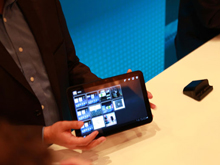
The Motorola Xoom, a tablet that will launch by March exclusively on Verizon, was the most talked about of the Honeycomb tablets, and it won the CES Best In Show award. The Xoom's hardware is more capable than the iPad's: it has a 10.1 inch screen that can play full 1080p HD video, front and rear cameras, and a powerful dual-core NVIDIA graphics processor. It can also handle Adobe's Flash software, which is incompatible with the iPad and which is used for a great deal of interactive content and video on the Web.
A fully working version of the Xoom has yet to be demonstrated, so it's hard to know whether the device really will match the iPad's slick user experience. The video running on the device gave only hints of how Android has been adapted to the tablet format. Changes from the previous phone-centric versions of Android include a Gmail client that makes full use of the screen's width, a Google Chat application designed for video chat, and a new Google eBooks app that looks similar to Apple's iBooks on the iPad. After announcing Honeycomb last week, Google has declined to answer any queries about its capabilities, requirements, and rollout.
Some companies that announced upcoming Honeycomb tablets at CES did not even show video of them in action. Acer's flagship Iconia tablet, due for release in April, was seen running only Android 2.2 (Froyo), as were about a half dozen tablets from Asus, including some with pen and keyboard input.
Since the new Android OS is apparently being released only to select partners, other companies showed new tablets that will launch using older versions of Android. Samsung unveiled a new version of the Galaxy Tab—the first major challenger to the iPad—running only Android 2.2 and talked of upgrading to 2.3, not 3.0. Dell showed a new version of its seven-inch Streak tablet running the same software.
When Apple's tablet debuted it was with a clearer message to consumers. "Remember that when Apple launched the iPad, they talked about the interface and experience, not so much about the technical specs and hardware—that's what sold it to consumers," says Robert Thompson, director of smart mobile devices at Freescale Semiconductor, which makes the processor found in Amazon's and Sony's e-reading devices and in a slew of Android tablets already on sale in Asia and Europe.
The still unclear state of Honeycomb means that the companies announcing tablets running the software can't yet boast about the user experience. Upgrading hardware designed for one version of Android to another has proven difficult in the past, Thompson adds, and doing so for the tablets waiting for the final Honeycomb release may prove challenging.
Harry Wang, director of mobile-product research at analysts Parks Associates, says consumers may already be confused about the current state of the Android tablet offerings. With Honeycomb in its early stages and many new devices still employing older versions of Android, the overall picture is hard to discern for both end users and manufacturers, he says.
"Unfortunately, Android has been loaded onto some devices that aren't suited to it," he says. "That has creates some awkward experiences and low expectations that do a disservice to Honeycomb and to the market as a whole." He expects manufacturers that wait six months or so to offer devices running a finished and fully tested version of Honeycomb will do best.
Unfortunately, Apple is expected to announce the updated iPad inside the first half of the year. "I think it will be the same size," says Wang, "but Apple will bring some new innovations—probably longer battery life, maybe lower weight." Some rumors suggest that the iPad 2, as it has been dubbed, will feature a screen viewable in direct sunlight, he says.
Apple's devices are likely to remain top of the growing tablet pile, says Wang. "There won't be an 'iPad killer,' but as with Android phones, there will be a large number of different models that together have more users than Apple." Wang estimates that 13 million tablets will ship worldwide this year.


From: TR

22 June 2011

The FlatPad A10: A Flawed iPad Competitor

The FlatPad A10 looks a lot like an Apple iPad, with the same black bezel and single circular button at the bottom of the screen. But the A10 costs only $220, compared to $499 for the cheapest (16-gigabyte, Wi-Fi-only) iPad. The A10 is also has a slot for more memory (micro-SD format); and most importantly, the A10 runs Google's open source Android operating system, making it one of the first Android-based tablets available for sale in the U.S. The A10's specifications make it seem like a strong competitor to the iPad. This Android 2.1 device has a 10.2-inch touch screen. It has 256 megabits of RAM and two gigabytes of built-in flash. There's Wi-Fi and an Ethernet port, two USB ports (one for programming the A10, one for connecting other devices), and built-in stereo speakers. It's got a one-gigahertz processor, an accelerometer to detect screen orientation, and runs Google Maps. The battery lasts five hours. But make no mistake, the A10 is no iPad. Manufactured in China by Zenithink and imported by Texas-based Flat Computing, the A10 lacks the quality and the software/hardware integration largely responsible for the iPad's success.
But while it's easy to dismiss the A10 as a knockoff, I think it's better to examine this device as an early prototype that points to a possible future of tablet-based devices--and to a set of growing problems inside the Android ecology. These issues will need to be addressed if other recently announced Android-powered tablets--Samsung's Galaxy, Toshiba's Folio 100, and ViewSonic's ViewPad 7--are to be successful.
Despite looking a lot like an iPad, the A10's hardware falls short in several important ways. Whereas the iPad's screen is 1024 by 768 pixels, the A10's is 1024 by 600, and it turns out that those extra 168 pixels matter a lot. Instead of the iPad's multitouch capacitive screen, the A10 has a resistive screen that works much better with a fingernail (or a pen cap) than with a fingertip. The screen lacks the brightness, clarity, and color of the iPad's, presumably because Apple gets the best screen available to justify the iPad's high price, while Zenithink bought a much cheaper touch screen. Yes, the A10 has stereo speakers, but they sound no better than the "stereo" speakers on many cell phones. The iPad's mono sound port actually sounds much better. Even with my high-end headset, music sounds cheap and tinny on the A10.
The A10's lack of software integration is borderline comical. For example, when the A10 turns on, it says that there is "No Service," and the little cell phone indicator says that there are no bars--not surprising, since there is no cell phone chip inside. Zenithink appears to have used unmodified Android telephone software for this device. Like the iPad, the A10 has a black circular button with an outlined square, but the button is hooked up to Android's "back" feature, not "home." There is a rocker switch that looks like the iPad's volume control, but the left rocker actually makes the Android menu appear, while the right rocker displays a list of currently running applications.
Even though it's running Android, Google doesn't let the A10 or any other of today's tablet computers download Apps from the Android Marketplace. That's because the Marketplace blocks devices that don't meet minimum hardware standards--standards designed for cell phones. This will probably change when Google or one of its official hardware partners starts selling tablets for mainstream use. Until then, the only way to run Marketplace on the A10 is to grab the device ID from a real Android phone and program it into your A10, a complicated procedure that requires significant skill.
Instead of the Android marketplace, the A10 comes with something called the SlideME Marketplace--an independent market for Android apps. SlideME has only a few thousand apps, compared to Google's tens of thousands. After some effort, I was able to download Opera Mini, the Android version of the once-popular Opera Web browser. The A10 displayed the somewhat reassuring message: "This application seems compatible with your device specifications and current system software version." But when I ran Opera, the A10 froze. Only by resetting the A10 with an unbent paperclip and then restarting the device was I able to get Opera to finally run. Once I did, though, it ran flawlessly.
You might be tempted to think that it's the first Android-based tablet to hit the market. It's not. Both the Barnes & Noble Nook and the Archos Internet Tablet run Android. And while the Nook and the Archos are both respectable devices, they are closed systems in which the main functionality is what comes with the machine, rather than what you can download.
The Android platform is fast becoming for handheld devices everything that Windows has been for the desktop--a cheap operating system that vendors adapt as necessary. Precisely because Android is available to a multitude of companies and being used on a multitude of hardware platforms, it may never offer the high-quality experience that users have come to expect from Apple's iPads, iPhones, and iPods.
Many companies, such as Dell, HP, and Microsoft, have looked longingly at Apple's iPad sales figures and burned the midnight oil to deliver their own tablet computers with a similar form factor. But these devices will have a hard time getting traction. There's more to an iPad than just the hardware and software--Apple is also selling iTunes, the iTunes store, the App Store, and tens of thousands of highly experienced app developers. In the iPhone/iPad/iPod universe, there is a single, easy-to-use way to find, buy, and download music. Such clarity is unlikely to ever come to the Android platform, though, because different companies that are using Android have their own preexisting music strategies--many of them in conflict with one another. When you buy a new iPad or iPhone, you know that it's running Apple's most up-to-date operating system. Apple has also made it easy for iPhone, iPad, and iPod Touch users to keep their system software up-to-date. Go into a cell phone store today and you'll see new devices running a range of Android systems from 1.6 to 2.2. Buy a device running Android 1.6 or 2.1 and you have no idea when--or if--the software will be updated.
I can't recommend the FlatPad--there are just too many problems. But I increasingly suspect that other planned iPad competitors won't be able to replicate Apple's success, either. The iPad isn't simply an integrated hardware/software. Its premium hardware--a really great screen, the world's best touch pad, premium sound--all leveraging an integrated software platform and Web store that Apple has spent years refining. Android tablets don't just have Apple's head start to overcome. They also have to overcome structural problems with the Android platform that Apple's integrated approach avoids.

Google Places Two Bets on a Post-PC World

Two gadgets that began shipping last week represent assaults from Google on the dominant model of computing, in which we use a cursor and a keyboard to manipulate boxes and windows on a virtual desktop. Samsung makes the hardware for both: the Series 5 Chromebook notebook, the first computer with the browser-only ChromeOS, and the Galaxy Tab 10.1 tablet, whose operating system is the latest version of Honeycomb, the tablet edition of Google's Android mobile operating system.
These products have arrived at a pivotal moment for computing. Steve Jobs popularized the phrase "post-PC era" to describe what's supposed to come next, with the iPad displacing the window-driven, desktop-focused experience that the word "computer" conjures up. Now Google too is offering alternatives to that experience, taking on traditional computing with a pincer movement of tablets and Chromebooks. That the two are advancing together may be either an accident or a deliberate attempt to establish distinct post-PC categories—all we know for sure that Google likes to experiment publicly.
The Galaxy Tab
The Galaxy Tab 10.1 is a close match for—some might say it mimics—that proven PC-skewering weapon the iPad 2. The tablet that I reviewed is a special edition, with Android logos on the back, that was handed out to developers and lent to journalists at the Google I/O conference last month. You can buy it without the decoration for $500 with 16 gigabytes of storage or $600 with 32 GB. It's WiFi-only for now, but a version with a cellular data plan is due out soon.
The Galaxy Tab's similarity to the iPad 2 highlights the fact that in the tablet world, hardware is scarcely relevant. A responsive, glossy, color-rich touch screen, eight-hour-plus battery life, and front and rear cameras are all table stakes by now. The Galaxy Tab 10.1 is actually slightly slimmer than the iPad 2 (by 0.2 millimeters) and lighter (by 35 grams), thanks to the plastic back it has, instead of an aluminum one. It's also more widescreen, with a 16:10 aspect ratio.
Google's post-PC vision—like Apple's—is all in the software, but this is where the similarity ends. Jobs's claims about the first iPad's "magic" were dismissed by those who saw the device as nothing more than a "giant iPhone," and the iPad 2 can still be accurately described that way. When you turn it on, you are greeted with a grid of every app you ever installed. Customization doesn't go beyond the ability to group the icons into folders and move six to privileged spots on a dock at the base of the screen.
The Galaxy Tab's Honeycomb 3.1, however, seems to be gunning to replace the desktop experience with something that looks to be suspiciously like another one, albeit without a mouse. You can clutter your five desktops with app shortcuts to your heart's content. You can add "widgets" (cut-down, interactive versions of regular apps) to that clutter to do things like provide a permanent view of your e-mail inbox or music player. This latest release of Honeycomb allows you to resize your widgets, an option that makes it possible to create a desktop-PC feel by putting, for example, a calendar and an e-mail inbox side by side.
Honeycomb even comes with a very Windows-like system tray—a  place where running apps can be seen and notifications pop up—in the bottom right corner. But it all adds up to a less slick experience than an iPad—there's much more to tinker with, and you invariably leave things untidy. The Galaxy Tab 10.1 requires a steeper learning curve than the iPad 2.
The Chromebook
The second part of Google's post-PC vision requires is even trickier to master.
I used the "stable" version of Chrome OS that comes with Samsung's Series 5 Chromebook on Google's prototype the Cr-48 notebook, released last year, which has much the same hardware. The Samsung Series 5 will set you back $430 with 16 GB of storage and Wi-Fi only, or $500 for the same with 3G added (yes, it has less storage than you can get with the Galaxy Tab).
Learning how a Chromebook works is pleasant enough at first, as you adjust to a computer that takes just eight seconds to switch on from cold, and one second to wake from sleep (a state it can maintain for over a weekwhen starting with a full charge). The machine may be physically lightweight and have stripped-down functionality, but unlike some netbooks, it provides snappy access to even complex Web pages and handles full-screen Flash video just fine. Its settings menu is delightfully spare and really highlights the fun of junking a lot of stuff you always assumed had to be there in an OS.
But you soon hit the post-PC limitation of this vision: not being able to store files on your computer or do anything while offline. Users are encouraged to "install" Web apps from the Chrome Web store, but that essentially means adding a bookmark. File storage is intended to be via online services like Google Docs or Google's beta cloud Music locker. (Google has said some of its services will work offline by later this year.)
Two recent additions to Chrome OS help, enabling you to view files that are on a USB drive and play music or video from a connected device, but both feel very primitive. When you can't get Wi-Fi, or use 3G if your Chromebook has it, this vision of post-PC computing feels post-apocalyptic: everything digital you (digitally) own is gone, and your only chance of getting it back is to reinvent the Internet from scratch.
When you look at them together, it's clear that each of Google's two takes on a world beyond the PC demands considerably more of users than the simple, singular vision promoted by Apple. You're expected to take a more active role in managing the complexity (Honeycomb) or the limitations (Chrome OS) of your device.
A deficiency the pair have in common is a lack of decent apps: the Chrome OS and Android tablet app stores are pitifully bare. Google claims that both are about to be saved by waves of innovative apps from third-party developers, but it's an argument that feels persuasive only for tablets. Android phones had a few delinquent early years while their app ecosystem got started. But the Galaxy Tab's groundwork of a richly featured if somewhat complex OS has been laid, and it just needs more app developers to come and build. The foundations of Chrome OS, however, are not so complete. Here Google is relying on developers to create powerful Web apps that work offline even before its own apps do so, or the OS feels like a finished product.
The two claws of Google's pincer movement against traditional PCs may each offer more features - and complexity - than the iPad, but only one, Android Honeycomb, feels capable of doing as much damage as Jobs' magical giant iPhone.

A Nightshirt to Monitor Sleep

What if your pajamas could tell you how well you slept? That's the dream of startup Nyx Devices, which has developed a nightshirt embedded with fabric electronics to monitor the wearer's breathing patterns. A small chip worn in a pocket of the shirt processes that data to determine the phase of sleep, such as REM sleep (when we dream), light sleep, or deep sleep.
"It has no adhesive and doesn't need any special setup to wear," says Matt Bianchi, a sleep neurologist at Massachusetts General Hospital and co-inventor of the shirt with Carson Darling, Pablo Bello, and Thomas Lipoma. "It's very easy—you just slip it on at night," says Bianchi, who has no formal role with Nyx Devices.
When people with sleep disorders spend the night in a sleep lab, they are hooked up to a complex array of sensors that monitor brain activity, muscle activity, eye movement, and heart and breathing rate. Nyx's Somnus shirt dramatically simplifies this by focusing only on respiration. "It turns out that you can tell if someone is awake or asleep and which stage of sleep they are in purely based on breathing pattern," says Bianchi. "That's a much easier signal to analyze than electrical activity from the brain."
During REM sleep, the respiratory pattern is irregular, with differences in the size of breaths and the spacing between them. Breathing during deep sleep follows an ordered pattern, "like a sine wave," says Bianchi. "And the breath-to-breath differences are very small." The lighter stages of non-REM sleep fall somewhere in between. "The motivation behind the shirt is to allow repeated measurements over time in the home," he adds. Users can log their habits, such as coffee or alcohol intake, exercise, or stress, and look for patterns in how those variables affect their quality of sleep.
Analyzing sleep stages based on respiration is still considered experimental. But Bianchi is now testing the device on patients who come to his sleep clinic who are also assessed using standard technology, known as polysomnography. The team will soon begin home tests of the shirts to further validate its use outside of the lab. The company hopes to have a commercial product available by summer of 2012 for less than $100.
The shirt is part of a growing number of devices that people can use to monitor sleep at home. The simplest, including an iPhone app, use accelerometers to measure movement, giving a rough gauge of when people fall asleep and wake up. A more sophisticated consumer device that monitors electrical activity from the brain and muscles, called the Zeo, came on the market two years ago.
While Nyx envisions the shirt as a consumer product, Bianchi wants to use it for his patients. Bianchi's previous research has shown that people with insomnia often underestimate how much they sleep, so he wants to determine whether giving them an objective way to measure sleep will help them reassess their condition and improve quality of sleep. "It will be a game changer for my clinical practice," he says. "There are zero objective tools available to physicians to assess insomnia."

From: TR

Quantifying Your Sleep

Last week, in a converted garage in Somerville, Massachusetts, a group of about 30 eager experimentalists and curious insomniacs gathered to share the results of their latest investigations. Several members of the group had spent the month of March using a consumer device known as the Zeo to track their sleep patterns and observe how the patterns change with different factors, including weather, color of ambient light, and location. While the individual results aren't going to change our notions of sleep, the overall trend of self-experimentation just might.
The Boston-based group is part of a nationwide movement known as Quantified Self, a collection of people who employ the growing numbers of sensors, trackers, and data analysis tools to monitor intimate details of their lives. While more-traditional scientists may argue about the objective value of an experiment with an N of 1, quantified selfers, as they call themselves, say that is beside the point. They are investigating how various physical variables affect the quality of their lives in the most rigorous way possible.
Physical activity, heart rate, and nutrition are the most commonly tracked personal metrics, but new tools that are gradually moving from medicine into the consumer world have opened additional vistas in personal exploration. Zeo's sleep monitor, a consumer device that costs $199, uses a single sensor worn on the forehead to track electrical activity; specialized algorithms determine whether the wearer is awake or in deep, light, or REM sleep, as well as how many times she or he wakes and total duration of sleep. (Topics for future meetings include blood glucose monitoring and perhaps even personal genomics.)
While Zeo's developers originally envisioned the device as an alarm clock to wake users in their lightest phase of sleep, the company quickly realized that people are fascinated by all aspects of slumber; we spend one-third of our lives asleep, and many people are desperate either to get more of it or to function better on less. But it's a state that has been difficult to self-monitor. "People are really curious about sleep," says Stephan Fabregas, a research scientist at Zeo who spoke at the meeting. "They want to know if they are normal and, if not, what they should do about it."Zeo lent the group a number of devices for a month to see what kind of experiments members would come up with. Jacqueline Thong, a self-described "good sleeper," found she slept equally well in her bed, on her couch, and on the floor, prompting her to question the value of her expensive mattress. Adriel Irons, who claims to be able to predict the weather, was unable to link his sleep quality to local weather patterns.
Sanjiv Shah, a former insomniac, had the most dramatic findings. He had already discovered that orange glasses, which filter out blue light, help his sleep. (Research has shown that blue light can affect circadian rhythms.) To quantify those benefits, he used the Zeo, the fitbit (a motion sensor device that tracks daily activities), and a camera trained on his bed to record his sleep for a month: two weeks wearing the glasses for three hours before bed and two weeks without them. The benefits for Shah were clear; without the glasses, he took an average of 28 minutes to fall asleep, but with them he took only four. His deep sleep without the glasses averaged 60 minutes, versus 86 minutes with them.
The caveat, of course, is that it's impossible to rule out the placebo effect in Shah's striking results. Matt Bianchi, a neurologist at Massachusetts General Hospital who also spoke at the meeting, says that no large-scale studies have shown that orange glasses have this benefit. But Zeo's Fabregas says that doesn't matter. The glasses work for Shah, and in this case, that's what counts.
Zeo aims to expand the realm of sleep self-experimentation with an API (applications programming interface), as well as an interface that allows users to view their data, and even a data library that gives access to a huge volume of stored sleep data from many of Zeo's users. Consumers can now integrate Zeo data with that from monitoring programs such as DailyBurn, a calorie tracking program, and RunKeeper, an app that tracks physical activity.
Bianchi, who studies a number of sleep disorders, says an individualized approach to the study of sleep may help shed light on its complexities. He points out that there are huge limitations to how sleep is studied in clinical sleep labs and research labs where people are attached to sensors and entangled in wires. "I have become very skeptical of sleep science and clinical trials, so I have become very interested in what individuals have to say," says Bianchi, who is developing his own home sleep-tracking tool.

How much value does cellular access give gadgets?

PlayStation Vita
The PlayStation Vita will provide another opportunity to study the impact of a premium for cellular access.
(Credit: Sony)
At E3 this year, Sony presented more details about its forthcoming handheld formerly known only as the NGP. Now revealed to be the PlayStation Vita, it continues the PSP (and PS3) tradition of inviting a new generation of games with a powerful combination of technologies. These range from a pair of cameras, an accelerometer, and gyroscopes now found in many handsets to a quad-core processor, 5-inch OLED display, and a touch-sensitive back panel to complement its touch screen. It will also be the first handheld console from a major brand available with optional cellular access. Thus, the PlayStation Vita, priced at $249 for the Wi-Fi-only version and $299 for the cellular version, will provide another opportunity to study the impact of a premium for cellular access.
The Wi-Fi-only PlayStation Vita is priced almost perfectly between the Amazon Kindle at $139 ($114 with "special offers"), and the $499 entry-level iPad. The least expensive 3G iPad commands a $130 premium over its Wi-Fi-only counterpart whereas the cellular-equipped PlayStation Vita--like the 3G Kindle--is priced at a $50 premium. Looking at it in terms of percentages, the cellular premium breaks down as follows--Kindle: 36 percent, PlayStation Vita: 25 percent, iPad: 26 percent.
Of course, the price of the device is but one factor. The data-supping Kindle provides free cellular access, whereas the iPad monthly plan starts at about $15 per month. At this point, there's more to be revealed regarding how the Vita will use the cellular network or how that usage will be priced. The experience to date has been that the less expensive Wi-Fi-only versions of unsubsidized popular portable electronics outsell their cellular-equipped counterparts.
For example, in NPD's Apple iPad Owner Study II report completed in March, NPD found that only 18 percent of iPad owners cited 3G connectivity as a feature that most attracted them to the device, down from 24 percent last August. In addition, NPD found that more than half of even iPad 3G owners don't use it with any cellular plans; that number grew to more than two-thirds for most recent owners. However, as its home console rival Microsoft ties Xbox Live into its Windows Phone platform, Sony is exploring cellular connectivity in other ways. It has integrated its PlayStation Suite into its recently released Xperia Play and will be certifying other Android handsets.
Carriers have yet to find a mass-market portable electronics product outside of handsets that makes a compelling case for cellular, even when access is free as it is with the Kindle.
Carriers have yet to find a mass-market portable electronics product outside of handsets that makes a compelling case for cellular, even when access is free as it is with the Kindle. The relatively poor performance of the more expensive Nook, for example, has led Barnes & Noble to opt for Wi-Fi-only on both its color and second-generation e-paper-based models even as the device would have proven more capable of tapping into a wider range of Web-based media as other tablets do.
But the quest continues, and AT&T recently announced that it is working with Panasonic on connected car entertainment systems, following work with other car companies such as Ford and Nissan and exploring distribution beyond electronics retailers.
Like the 3G Kindle, the cellular Vita will face competition not only from its locally connected twin, but from a major competitor--the Wi-Fi-only Nintendo 3DS, also priced at $249. However, the Vita may be able to utilize something the iPad has not--access to a shared device plan. At the D9 conference, AT&T Mobility CEO Ralph de la Vega shared that AT&T is planning to roll out such an option. Functionally, such a plan may not yield much greater benefit than the now prevalent personal hot spot or access point plans, but it would streamline the connection experience for products with embedded cellular.